While on a zealous search to see what kinds of dance could be found in the cinema of Sri Lanka, India's island neighbor to the south, I was completely perplexed when I stumbled onto this Bharatanatyam-based dance in the 1965 Sinhala film Hathara Maha Nidhanaya:
Starts :53
My cursory understanding of the history of the ethnic Sinhala-Tamil conflict and civil war in Sri Lanka made the dance unfathomable to me! The film is in Sinhala, the language of the Sinhalese Buddhist majority of Sri Lanka, and the staging of the dance is clearly referencing national pride given the image of the Sri Lankan island and national flags (different from today's style) placed prominently in the background and acknowledged by the dancer (and very reminiscent of many Indian film dances in front of the image of India, such as Vyjayanthimala in Penn). The audience of young, mixed-gender school children indicates a respectable, common setting, and the dancer's clothing is very Sinhalese in style (according to a Sinhalese acquaintance).
Despite all of this, the dancer is performing choreography inspired by Bharatanatyam, the dance associated with the minority Tamils, along with what appears to be some Kuchipudi influence such as the backwards anchitam movement of the feet on the heels! And to add to the confusion, the jewelry she wears with her Sinhalese dress is the traditional Hindu temple jewelry of a Bharatanatyam dancer (edit: I've since learned that the headdress is not exclusive to Tamil culture in Sri Lanka). I would have expected to see Bharatanatyam dance in the less-developed Tamil-language cinema of Sri Lanka, but I certainly would have never imagined seeing it in a Sinhala film and especially not in a scene depicting national pride which by that time was apparently well-equated with the majority Sinhalese Buddhist culture and Kandyan dance. Browsing through the rest of the film, the dancer only seemed to appear in this song and there was no indication she had any context in the film that would explain her dance and its stylistic choices.
Last week saw the end of the fourth Naada Bindu Festival—a three-day residential arts retreat at the Chinmaya Naada Bindu gurukul for Indian performing arts in Pune. The festival features a number of dance and music performances, lecture-demonstrations, and other activities. Ramaa Bharadvaj, whose "Reminiscences of a Disciple" personal article on Kamala I posted back in 2011, is the director for dance at the Chinmaya Naada Bindu and she "conceptualised, designed and edited" a journal for this year's festival titled Rasikatvam. I had the honor of being invited to write an article for the journal on the topic of classical dances in cinema culture, and I chose to write specifically about the advantages and distinct pleasures that screendance offers to audiences of Indian dance. My submitted article was edited somewhat and given a snazzy layout for the final printing. Images of the article are at the end of this post and it can be viewed in its entirety here.
I wrote the article as a beginner to the topic of screendance, and as I read some published literature on the subject it became clear that the growing field is rich in thought-provoking theory with ample room for further analysis and scholarship. The sources I found the most exciting and comprehensive and would recommend to anyone interested in this subject are first Harmony Bench's review essay in Dance Research Journal, and then the two books that Bench reviewed: Screendance: Inscribing the Ephemeral Image by Douglas Rosenberg (especially chapters 1-3; brief Google Books preview) and Dancefilm: Choreography and the Moving Image by Erin Brannigan (previewable on Google Books).
Reading these sources has changed the way I view Indian dance as captured in cinema and by the camera, and a spark has been lit in my mind about the advantages and pleasures the format offers to Indian dance forms. I'm not sure that I really got to the heart of my excitement in my basic and dryly-written article, but it provides a basic overview of the advantages of Indian dance on film and some interesting food for thought.
While browsing through the Utah Digital Newspapers website (mostly public-domain material, woo!), I was surprised to learn that Uday Shankar, Ruth St. Denis, and Ted Shawn all performed multiple times in Utah, my current U.S. state of residence, between 1911 and 1962!
That Uday Shankar performed here was most surprising of all. In all my past reading and research about Uday Shankar, I had never read a reference to him or his company performing anywhere in the Intermountain West region of the United States. Very little details about Shankar's touring schedules are available, and for a long time I assumed his company only performed in big cities like New York City, Chicago, and Los Angeles because those were the only ones briefly mentioned.
General details of Uday Shankar's tours are outlined in the writings of Mohan Khokar and Ruth Abrahams. Nearly all of the performances in the U.S. by Shankar's company were sponsored by the renowned impresario Sol Hurok who first saw the group perform in Paris. Uday Shankar's first company (comprised of family, friends, and Simkie) first toured the U.S. in 1932-33 and 1933-34. Uday Shankar's second company (with new choreography and dancer additions Zohra Segal and Madhavan) performed in the U.S. in 1936-37 and 1937-38. After a return to India, the opening and closing of the Almora Center, and the release of the film Kalpana with little commercial success, Shankar and his third company (entirely revised with dancer addition Amala Shankar) returned to the U.S. in 1949 for a 10 week tour and again in 1951-52. The company's last performances in the United States took place in 1968.
Ruth Abrahams' dissertation on Uday Shankar is the only source I've found that gives specific details about Shankar's tours. A 1933 touring schedule on page 147 reveals that beyond the expected big cities, the tour included stops in places like Cleveland, Ohio; Madison, Wisconsin; Springfield, Missouri; Birmingham, Alabama; Waco, Texas; Tuscon, Arizona; and cities along the coastal pacific northwest and California. Abrahams notes, "The magnitude of the tour effort is remarkable to consider when one reflects on the circumstances of the times, the lack of convenient transportation, and the sheer bulk of personnel and baggage. Amenities, both professional and personal, were schizophrenic in effect—sometimes luxurious, but more often minimal, and the company was hard put upon to locate decent, affordable restaurants and housing. Usually, they just ate and slept on trains between concert dates." I wonder if the company encountered difficulties in their Deep South performance in Birmingham. When Indrani Rehman and her troupe performed in Louisiana almost three decades later in 1961, the troupe was refused admission to two restaurants due to racial segregation [14].
Source: Utah Daily Chronicle[12]
It wasn't until I took a stroll through the Utah Digital Newspapers website that I discovered Uday Shankar and his company performed in Utah at least three times in the 1950s and 60s. The company performed first in 1952 at the Capitol Theater in Salt Lake City and then in 1962 gave two performances—one at the College of Southern Utah in Cedar City and another at Kingsbury Hall at the University of Utah. The picture on the right is from an article announcing the Kingsbury Hall performance, and I don't believe I have seen it anywhere else! A 1962 tour is not explicitly mentioned in Abrahams' or Khokar's descriptions (Khokar just says Hurok sponsored Shankar's tours several times from 1949-1968), so this discovery adds to the knowledge base about Shankar's touring schedules.
Since I last posted about the amazing video find of two South Indian devadasis dancing in Baroda around the 1930s, I have been obsessed with finding proof of two things: the identities of the devadasis, and the true date the video footage was filmed.
BritishPathe has no documentation for the video (only noting it "appears to be some kind of celebration") and through personal communication with me confirmed that the "1930-35" date estimate was based only on other films found in the same canister. I'm excited to reveal my research on this incredible footage of not only pre-revival "Bharatanatyam" but also royal activities in a princely state before Indian independence! While the identity question is still being investigated, I feel like I can make an educated guess about the date: mid to late 1920s, most likely 1926! This is based on the youthful appearance of Pratapsingrao in the video and the fact that a BritishPathe film crew was present and would likely have only done so for especially large events, most likely the 1926 Golden Jubilee.
Why is the Date Important?
Beyond being able to give a date estimate for a rare video with no documentation, I find the date determination important because if it was really filmed around 1926, the dance segment is an example of "Bharatanatyam" dance before most of the significant legal events and reconstruction activities towards the devadasi lifestyle and dance occurred in India and before the "dance revival" of the 1930s. In the Madras Presidency, Muthulakshmi Reddy didn't make her recommendation to the Legislative Assembly to criminalize temple dedication until 1927, the Music Academy of Madras was not even founded until 1928-29, E. Krishna Iyer presented the first dancers from the traditional community at the annual conference starting in 1931, and it was years later before Rukmini Devi Arundale presented her arangetram in the dance form and created the institution Kalakshetra. Closer home to Baroda, the neighboring Bombay Presidency did not enact its anti-devadasi legislation until 1934 [7]. While anti-devadasi sentiment and actions had been in place across the subcontinent since the mid 1800s, the fact that the video appears to have been filmed in a princely state before the most fervent formalization of the sentiment makes it especially important to the historical record.
But what has also been fascinating is that getting to my 1926 estimate resulted in a rich yield of research and rare photos about the princely state of Baroda (presently Vadodara) which I'm excited to share here. I've been able to identify a few people in the video as well as nearly all the filming locations!
Over a year ago, I featured three rare film dance sequences of members of Madame Menaka's "Menaka Indian Ballet"; twowere from the 1938 German film Der Tiger Von Eschnapur and the other was from the 1938 British documentary Temples of India. Medame Menaka (real name Leila Sokhey) is generally recognized as an instrumental figure in the transformation of the maligned North Indian "nautch" dance to respectable "Kathak" in the 1930s. Not only was she among the first (some would say the first) Brahmin women to perform Kathak on the public stage at a time when public female performance was stigmatized due to its association with prostitution, but also she was a pioneer in refashioning the form with a modern, dance-drama format and introduced Kathak technique to the international community for the first time through her troupe's tours of Europe and Southeast Asia. Unfortunately, Menaka's name and contribution remain generally forgotten today outside of serious dance circles due to her early death in 1947, the demise of her dance school soon after, and the establishment of Kathak as a patriarchal tradition that rarely acknowledges women practitioners of the past "as gurus, teachers, co-creators, or pioneers" (Chakravorty).
Given Menaka's importance to Kathak dance and her billing as a dancer using Kathak technique, I was perplexed when I first watched her troupe's performances in Der Tiger Von Eschnapur. The first dance segment had absolutely nothing to do with Kathak and the second only marginally so; both seemed to be presenting a generic, "exotic" Uday Shankar-style aesthetic that did not follow any particular form of Indian classical dance and instead looked inspired by Javanese dance. At the time I figured Menaka must have bowed to the demands of the film which wanted to feature an "oriental" spectacle.
But this interpretation was turned on its head this week when I got a hold of the late Kathak dancer Damayanti Joshi's biography of Madame Menaka. Joshi explicitly notes the dances in Der Tiger Von Eschnapur were excerpts from two of Menaka's earliest dance-drama creations, Krishna Leela and Deva Vijaya Nritya! What's more, the costumes are clearly authentic pieces straight from the real-life productions, and it's highly likely the music is authentic as well. What conclusions can be drawn from this striking information? I'll get to my thoughts later on in the post, but first I want to review the songs again and reveal who the dancers were.
While browsing the website of the National Portrait Gallery in London, I discovered they have a page on the late famous dancer Ram Gopal who is generally recognized as the first Indian dancer to bring classical/traditional Indian dances (as opposed to Uday Shankar's style) to the West starting in the late 1930s. As I read the NPG's description of Gopal, I couldn't believe my eyes:
"After the War he starred in a number of Hollywood epics made on location, such as The Purple Plain (1954), and William Dieterle's Elephant Walk (1954), for which he had also choreographed the dance sequences.”
What?! Ram Gopal starred in Hollywood films and choreographed a dance? In all my reading about Ram Gopal I had never come across mention of his stint in films! Of course, I had to go on a little research journey and find out as much about this as I could. It appears that he had supporting character rather than starring roles in a few films.
Ram Gopal's Hollywood/British Film Work
Elephant Walk (1954) - This American film contains the only feature film dance associated with Ram Gopal I was able to find. The dance appears to be a traditional Kandyan dance and according to the credits is performed by dancers from the Madhyama Lanka Nritya Mandala, the landmark first traditional Kandyan dance school in Sri Lanka established in the 1940s by traditional Kandyan dancer Suramba Gurunnanse/Rajapakse and still functioning today [website no longer up but archived here]. Kandyan (or “up-country”) dance is one of the three main dance forms
identified with the majority Sinhala ethnic community in Sri Lanka and
is considered Sri Lanka’s national dance.
The film dance was supposedly filmed at the sacred elephant octagonal at the Temple of the Tooth in Kandy. Gopal is credited as the dance's choreographer which I found interesting since I've not read of his learning Kandyan dance in his autobiography or elsewhere. But he did tour Sri Lanka (formerly Ceylon) in the 1940s and tried to start a "School of Pakistani, Ceylonese, and Indian dances" in the 1960s, so he certainly must have picked up Kandyan dance somewhere along the way. An article in Sri Lanka’s Sunday Times newspaper claimed that the male lead was Ram Gopal himself, but I’m convinced it’s not after taking some screencaps of the lead dancer who definitely does not look like Ram at all. The only person that remotely looks like Ram Gopal is the man with the spear dancing around the masked elephant at the end.
Definitely not Ram Gopal
The film dance begins with a procession of dancers walking to the performance space and then cuts to a group of male dancers wearing what looks like authentic Ves costumes. The lead performer, pictured above, gives an incredibly energetic performance! The sequence is frequently interrupted by the irritating dialogue of the luminous
Elizabeth Taylor and her companions. At 2:34, the female dancers
appear and another solo dancer gives yet another energized but brief performance. It's interesting that the women are not wearing the female Kandyan dance costume seen today. The number quickly goes downhill when white chick Mylee Haulani saunters in to titillate
the male onlookers but is revived when the masked elephant dancer appears at 5:15. The feel of the whole sequence is one of the
"sophisticated" westerners
watching a "quaint" but strange "oriental" dance performance of the
country
they are in. I wonder if any of the dancers in the scene were
well-known Kandyan dancers in the 1950s? Definitely an excellent archival piece of Kandyan dance history. Here tis:
What was dance in early Indian cinema like? It wasn't until a few weeks ago that I considered this question worthy of pursuing video evidence of. I had read how the vast majority of India's silent and early sound cinema was either lost or destroyed in fires with the teensy remainder securely locked up in places like the National Film Archive of India (NFAI) with occasional public screenings. Certainly not viewable anywhere online, I assumed. But I was wrong!
When I recently learned about IndiaVideo.org's lovely "Celebrating 100 Years of Bollywood" series (thanks Gaddeswarup for your comment!), I was thrilled to see publicity pictures from India's earliest silent cinema, Pundalik (1912), clips from the first official indigenous Indian feature film Raja Harishchandra (1913), and also pictures from India's first sound film Alam Ara (1931). I hadn't realized this year is the start of Indian Cinema's Centenary celebrations (meaning Indian cinema is in it's 100th year of "life" which will culminate in its 100th birthday in May 2013)!
Through recommend videos on the YouTube sidebar, I quickly learned that presumably non-professional YouTubers have uploaded Raja Harishchandra (1913, in the form of the 1967 National Film Archive documentary, D.G. Phalke, The First Indian Film Director1870-1944) and Kaliya Mardan (1919). Each upload looks absolutely authentic due to many scenes matching screencaps found at the NFAI and in books about silent Indian cinema. Both videos were uploaded in the past few months, and I assume it's not a coincidence that the NFAI just last month released a DVD of both films (Raja Harishchandra in partial form with only the surviving reels, and they added a third film, the 1931 Bengali silent, Jamai Babu). Perhaps as the DVD was in the making, some of the prints were "leaked" and folks outside of the official process uploaded them for public view? I'm curious if the DVD prints are different from what is online, especially since Kaliya Mardan looks like it came from a VHS tape with the tracking lines at the bottom. (Update 2019: Linked to new version of Kaliya Mardan.)
Raja Harischandra (1913)
Kaliya Mardan (1919)
As one would expect of me, I immediately noticed the dances in these films! In Raja Harishchandra, beginning about 36 minutes in a character (Tukaram?) begins playing what looks like hand cymbals and then an energetic group of men can be see moving down the street rhythmically moving from side to side and jumping up and down with religious devotion. I've been told they are dancing to a Bhajan which is a characteristic of the Bhakti movement. While this isn't quite meant to be a "dance" in and of itself, in Kaliya Mardan the dances, while in a devotional setting, are clearly and distinctly dance! Two unmistakable folk dances surrounding Krishna are in the film: one male-focused dance with sticks at 28:16 and the other a female-only dance at 35:40 with what appears to be tree branches, rope and/or sticks. There are also expressive depictions by the women starting at 31:15. I'm completely surprised to see such early filmic representations of dance!
Back in July, I discussed a stunningly-rare video clip (Update: Replaced link with better quality version after BritishPathe transferred its videos to YouTube!) I had found at BritishPathe.com featuring two South Indian devadasis dancing some clear Sadir/Bharatanatyam along with their musical ensemble filmed allegedly between 1930 and 1935. I initially was perplexed as to why South Indian devadasis would be performing at a royal function in Baroda, a city now known as Vadodara in the northwest state of Gujarat which is over 1,000 miles (1,600 km) away from Tamil Nadu state. Then I remembered a picture of two devadasis (left) who looked eerily similar from Ashish Mohan Khokar’s “Century of Indian Dance" exhibition catalog, and the picture’s description noted how Tanjore devadasis were sent to Baroda with the dowry of the Tanjore princess Chimnabai when she married the Maharaja of Baroda, Sayajirao Gaekwad III, in 1883. Were the dancers in that photo the same as the video? And if so (which is a RARE FIND!), who were they?
Devadasis appear 8:07
The big break in figuring out their identity came when dance enthusiast Ragothaman (a contributor at the blog Bharatanatyam and the Worldwide Web) sent me some excellent material he had found that identified the dowry dancers said to be sent in the early 1880s as Gauri and Kanthimathi (also spelled other ways, Gawri, Gaura, Kantimati, etc.). The only problem was sources say Gauri was born in 1871 and Kanthimati in 1872, which would mean they were around age 60 when the video was filmed in the 1930s. The video dancers certainly don't look 60! Another possibility was that BritishPathe identified the video incorrectly and it was really filmed much earlier, but given the photos and dates below this is highly unlikely. I think it's safe to say that the video dancers are not the famous Gauri and Kanthimathi. At first I was really disappointed by this news, but then a bit more logic and research revealed a fascinating history!
Gauri and Kanthimathi's Replacement Dancers
While the video dancers are not Gauri and Kanthimathi (more on them later), I'm convinced they are the court dancers who officially replaced Gauri and Kanthimathi after their retirement. There is a discrepancy among sources (Kothari, Sundaram) regarding exactly when they retired from court services, but the more plausible citation is that they served for 32 and 35 years respectively, putting their retirement date sometime in the 1910s or early 1920s. The video was filmed sometime in the 1930s, about 10-20 years after the point when Gauri and Kanthimathi retired and the new replacement dancers would have came to Baroda. The appearance of the video dancers backs this up; I've been told they look like they are in their 30s, so rewinding 10-20 years would mean they were pre-teens or teens when they were brought to Baroda which is as expected. Their service ended in 1950 when the royal family stopped maintaining court dancers.
Back in January, I had posted about the 1983 Telugu dance film Ananda Bhairavi and its star Malavika who performed some of my favorite film Kuchipudi sequences. I had lamented the fact that there seemed to be no information available on the "Malavika" person--not even her last name (though I made a tenuous guess she might be Malavika Venkatsubbaiah- wrong!).
I certainly wasn't prepared for what happened next. My wonderful commenters came to the rescue! After a lengthy comment thread full of increasingly-wonderful finds, Gaddeswarup spoke to the male dancer in the film (Bhagavathula Venkata Rama Sarma) and reported back that the actress was indeed Malavika Sarkar who was a Kathak dancer (Lucknow gharana) and learned Kuchipudi for Ananda Bhairavi after being approached for the role by director Jandhyala. I was stunned and amazed that she learned such crisp Kuchipudi just for the film!
At that point I figured that the research trail had come to its end. The dancer had been identified and a bit of her history revealed, but it seemed that we would have to be content with that as no more information seemed available.
Which is my I'm so excited to report that I found a short description and photo of Malavika Sarkar in the "Contemporaries" section of Sunil Kothari's 1989 book Kathak - Indian Classical Dance Art! Here is the photo and Kothari's description:
"One of the bright stars in Kathak, young Malavika Sarkar was trained initially in Kathak by Prem Shankar. Later on she studied intensively under the guidance of Lacchu Maharaj and soon made the grade on account of her natural gifts. She took part in many dance-dramas choreographed by Lacchu Maharaj. She has a natural grace and has imbibed Lacchu Maharaj's style in a commendable way. She runs a dance school Lacchu Maharaj Nritya Niketan in Lucknow. She is active giving solo recitals."
On a coupleposts I’ve featured a lovely, rare “twin” dance from the 1961 Malayalam film Bhakta Kuchela starring Kumari Kamala and an unknown dancer. There was a suggestion the unknown dancer might be Kuchala Kumari (of Konjum Salangai fame) who was credited in the film, but she looked different enough to still leave me curious of the Bhakta Kuchela dancer's identity. Well my friends, I’m so excited to confirm that the unknown dancer is none other than Kamala’s younger sister, Rhadha! Here is the dance; Rhadha is the shorter dancer on the left at the beginning, and apart from her occasional asynchrony with Kamala I think she does a great job:
I had read about this Rhadha person accompanying her famous sister Kamala (and other sister Vasanthi) in a film and on stage, but wasn’t able to find much other information. As I reread the excellent articles about Kamala from Sruti magazine, a look at some of the pictures of her sister Rhadha connected that distinctive nose to the girl in Bhakta Kuchela, but I couldn’t say for sure. When I tracked down the article about Rhadha, “The Dancing Heart,” written by Rhadha's close associate Sujatha Vijayaraghavan in issues 279 and 280 of Srutimagazine, the pictures it featured confirmed 100% that the Bhakta Kuchela dancer was indeed Rhadha! Just take a look- it’s unmistakable:
At last, the final installment of the "Indian Dances in Western Films about India" series! This post looks at Indian dances in Western-Indian historical coproductions about India. As I was finishing up Part 3 I realized that I had not included the gorgeous Padmini dances from Pardesi, a crime for sure! I wasn't sure where they would fit in this series since the film was a coproduction between India and the Soviet Union...thus, Part 4 was born. Coproductions with India get to "cheat" in the sense that they have lots of Indian assistance and input which results in more authentic dances. Unfortunately outside of Pardesi I've only been able to find one other coproduction with classical-inspired dances in it, so I've split this post into two sections: Soviet-Indian coproductions and the film Jhansi Ki Rani.
Soviet-Indian Coproductions
Raj Kapoor in Shree 420
Russian interest in Indian films is a fascinating subject of study! A couple great reads are the article "Soviet-Indian Coproductions: Alibaba as Political Allegory" by Masha Salazkina and the book "Indian Films in Soviet Cinemas: The Culture of Movie-Going After Stalin" by Sudha Rajagopalan. From these sources I learned that Soviet-Indian cinematic ties began in the 1950s and seem to have sprung from the political affinity of India and the Soviet Union. The Soviet Union apparently kicked things off by "courting neutralist India" and sending a group of filmmakers and officials there which was reciprocated in a visit by Indian filmmakers in 1954 resulting in an "official proclamation of friendship and cooperation between the cinemas of the two countries." It was very interesting to read that Raj Kapoor was a member of the Indian visiting group (along with Bimal Roy, Nargis, and others) and was said to have taken "copious notes" when the group visited the Soviet Institute of Cinematography, the "world's first film institute." Kapoor seems to have been a critical component of the Soviet-Indian film friendship and there are lots of Russian connections in his work; one of the most endearing was his song about his Russian hat and Indian heart in "Mera Joota Hai Japani" from Shree 420.
Ever heard of choreographer Jack Cole and “Hindu Swing?” Four weeks ago I had not either, but I think this could be one of the grooviest discoveries I've ever made on this blog.
While researching films about India and Orientalism for my "Indian Dances in Western Films About India" post series, I came across the article "The Thousand Ways There Are to Move: Camp and Oriental Dance in the Hollywood Musicals of Jack Cole." Clearly an interesting article just from the title, but as I read it my fascination was piqued when I read that Cole fused ethnic movements (most notably East Indian) into his choreography, started out as a Denishawn dancer, and studied with Uday Shankar! A Hollywood choreographer that studied with Uday Shankar? Tell me more! Tell me more!
The article discussed in detail the number “Not Since Nineveh” that Cole choreographed for the Arabian-themed Hollywood film Kismet (1955) and it emphasized his use of clear signifiers of Indian dance. OK, I figured there would maybe be some Indian-inspired hand gestures, some pretty arm movements, some namaste hands….
...but nothing prepared me for THIS:
“Not Since Nineveh” - Kismet (1955) - Note: If you are unable to see the video due to your country location, please view it here.
I don’t think I’ve ever seen a dance in Hollywood so brilliantly inspired by the geometry and precision of Bharatanatyam! I’m simply in awe. The Indian inspiration coupled with the syncopated jazz music makes for a completely new visual experience. "Hindu Swing" indeed, though the coinage of the religious term "Hindu" instead of "East Indian" is curious and likely a product of the time period. The dancers Cole used were clearly up to the challenge of his rigorous choreography; Reiko Sato, the princess in the middle, steals the show with her forceful, perfectly controlled, and expertly embellished movements. McLean, in an interesting take on the number, describes it and all other oriental Cole numbers as "unmarked transvestism" that Cole used as a "hidden" way to express his homosexuality (he was a closeted gay man); she notes how the princesses have fully-covered bodies and are masculine powerhouses with swords and gestures while the men are shirtless and dress rather femininely. I think the number is simply perfect, but apparently Cole felt the editing left out "some of his best choreography" (TCM). You mean there's even more on the "cutting room floor"?!
There could be no better way to kick off Part 3 of this post series than this hilarious poster from the film/documentary India Speaks (1933) directed by Richard Halliburton. Click here to view the image in all its full-sized glory (and try to pick your favorite tagline!):
It does put a damper on the fun to realize that the film, seemingly reissued later under different names (Bride of the East, Bride of Buddha, Captive Bridge of Shangri-La), was apparently a violent exploitation film that was withdrawn from release in India due to obvious objections. Awww, you mean it's not a serious historical film gone horribly awry in its pursuit of depicting a "bizarre India"? ;) Even so, it serves as a perfect (albeit extreme) introduction to the underlying attitudes permeating through many older historical empire films about India. I will lightly touch on these attitudes throughout this post but won't go into much depth because this post would turn into a novel! This post is split into four sections: The Incomparable Indian Tomb Films, Deliciously Orientalist, The Exotic "Bellydance" Stereotype, and Brief and Fleeting.
- The Incomparable Indian Tomb films! -
I couldn't ask for a better start to this collection than the wacky dances found throughout the various Indian Tomb films! In Part 2, I briefly noted that the 1918 German book The Indian Tomb has had many German film incarnations. Since it's so difficult to keep track of them all, here's a brief rundown:
Continuing on from Part 1 of the series, here in Part 2 I've listed those dances that don't quite fit in the upcoming Part 3 (orientalist dances) because although they don't appear particularly authentic there is something truly historically special and rare about them and they deserve a space all of their own.
The first two sets of dances are not from British or US films but, instead, Germany! I didn't realize that Germany's interest in India dates back to the Romantic Period and the many German romanticists who found inspiration in Indian writings. Not surprisingly, when films became mainstream a century or so later, quite a few German films concerned the subject of India. The history of "German Indology" is quite fascinating and complex particularly regarding German orientalism (and how it compared to British and French orientalism) and the rise of Nazi ideology in Germany; the book The Indo-German Identification looks like an interesting review of these topics and is previewable on Google Books. OK, on to the dances!
Der Tiger von Eschnapur (1938, Germany)
The 1918 German book The Indian Tomb written by Thea von Harbou has had many German film incarnations and keeping track of them gets really confusing! Let's just say this 1938 version (split in two parts, one Der Tiger von Eschnapur (The Tiger of Eschnapur) and two Das Indische Grabmal (The Indian Tomb)) directed by Richard Eichberg is the second film incarnation; the third version from 1959 will be lovingly covered in all its bizarre glory in Part 3. :) Anything and everything you would want to know about the various Indian Tomb films is covered in this great article from some obscure online magazine called Rouge.
Throughout the past few years, I've not given much attention to historical films about India made in the West. When I was reminded of the Odissi-inspired dances in Mira Nair's Kama Sutra a few weeks back, I had a sudden urge to answer the question "how have Indian dances been presented in Western historical films about India?" A new project was born!
Little did I realize that researching that question leads to the fascinating and complex topic of the depiction of the British empire in India and the British Raj through cinema and television miniseries released back to the early 1900s. There was practically an entire genre of adventure and action "empire films" in the 1930s made by the UK and the US, and the 1980s saw a resurgence of interest in India as evidenced by the many films and lavish miniseries released about the subject. Critical to my research have been sites like these which give excellent lists of empire films and films about India: The British Empire in Film (archived here), and The British Empire.
From Kim (1950)
These productions give a fascinating glimpse into how British and other Western cultures constructed a view of their activities in India/South Asia and how that view changed over time. Especially in older films, the British empire in India is painted as a valiant effort to save a "backwards" people from succumbing to their "intractable problems." Indians are presented as exotic, simultaneously fascinating yet barbaric, and in need of British and Western intervention. Often the films are propaganda pieces to garner public support of the occupation and military presence. I'll discuss a bit more detail in Part 3 of this series.
So amid such orientalist and imperial attitudes, how were Indian dances treated in these films? Did white women in brownface just wave their hands around in some sort of bastardized Persian "bellydance" with unusual costumes? Were any authentic South Asian movements utilized in the choreography? Did representations change as the years passed? In attempting to answer these questions, I've split this post into three parts: Part 1 (The Classical Era), Part 2 (Rare Dances), and Part 3 (Orientalism). [Update: Also Part 4 (Coproductions)]
I've selected dances mostly from Western historical films about India due to their serious or propagandist attempt at presenting India's history and showing (or not even bothering to research and show) authentic, classical-based and/or courtly dance forms. Modern films like The Love Guru or Marigold with lighthearted or modern "Bollywood" dances have not been included nor have documentaries like Louis Malle's Phantom India because the concern here is about authentic Indian dances being presented in constructed, artistic accounts of the past.
Part 1
The most authentic and beautiful dances in Western historical films and miniseries about India seem to be found in productions from the 1980s with the exception of 1951's The River. The 80s saw a resurgence in interest about India in the UK and the US that was reflected in all the releases about the subject (or perhaps because of the releases?). Think The Jewel in the Crown (1984), A Passage to India (1984), Peter Brooks' The Mahabharata (1989), Gandhi (1982), and even Indiana Jones and the Temple of Doom (1984). What was it that led to such a Western fascination about India at that time? Whatever it was, I'm glad it happened because productions of this period finally featured some decent Indian dances to show to Western film viewers.
The question remaining is why were these 80s productions leaps and bounds ahead of their predecessors in presenting Indian dance with degrees of authenticity? I think the answer lies obviously in the motivation of the films production. A 1930s film was concerned with presenting an exotic India and probably never bothered with researching the authenticity of "base" dance forms. Understanding what the 1980s films were concerned with is beyond my knowledge as it would require not only watching all of the films and miniseries and assessing their motivations but also understanding how Britain (and the US) were processing their colonial pasts at that time. But clearly enough time had passed by the 80s that perhaps enough postcolonial assessment and reflection had accumulated to spur film productions that actually sought out more honest depictions of the past including honest, authentic depictions of dance. What's surprised me the most is that after the 1980s, dance depictions seemed to revert back to less authenticity. What was it about the 80s! I'm sure there is lots of academic authorship on this subject; another topic to pursue!
Lord Mountbatten: The Last Viceroy (1986, UK, TV Miniseries) - This Masterpiece Theatre miniseries gets a gold star for having the most authentic classical dance of the series! I knew it was going to be great when one of the characters actually identifies the dance to the British as Kathak (wow! It's not just some generic "Indian dance" or "Nautch dance"). But I was floored when the dance began and I saw famous Kathak danseuse Saswati Sen! She's the same dancer who did the lovely Kathak dance in Shatranj Ke Khilari. To top it all off, the actual dance itself is a beautiful and authentic Kathak number. Despite the horrible acting of Gandhi's character in the series, the dances are just right.
Video no longer available online
The Far Pavilions (1984, UK, TV Miniseries) - Kathak makes another appearance in this HBO miniseries (apparently HBO's first), but this time the dancer spends some time seated and performs a well-rounded mix of abhinaya and pure dance. Despite the shots of the British officer's clearly-pleased "male gaze," I love the respect given to the dance form in the way the number is put together and the tone of the whole performance. I would recommend browsing through this series as it's quite visually lavish with lots of scenes of Indian culture, though there is of course many white folk in awkward brownface (the Indian princess really takes the cake!) and a focus on "backwards" practices like sati and the like.
Starts 9:22
Later on in The Far Pavilions is a lavish Indian wedding scene which is followed by a brief Rajasthani folk dance that looks to my eye very similar to Kathak at 2:58 (and some folk dance at 3:40). The presentation and quality of the first dance is noteworthy; the performer is clearly trained, and I love the appreciative reaction of her audience when she finishes.
Starts 43:45
The River (1951, France) - Given that many films about the British Raj take place in the northwest part of India (such as the Northwest Frontier, Khyber Pass, etc.), it is hard to find dance performances originating from South Indian dance traditions. That's why the straight-from-Bharatanatyam-adavus performance in Jean Renoir's lushly-colored The River is so special even if the film is set in Bengal. When I first saw this dance on YouTube long ago I thought it was yet another white girl playing Indian and attempting Indian dance; however, I recently learned that the dancer, Radha Burnier, was Rukmini Arundale's niece and the first graduate of Kalakshetra! While the dance is quite good, especially for a nonIndian film, Radha's movements are a bit lanky with a lack of sharpness and completion (and the less said about her facial expressions the better!) which surprised me given her dance background and my high expectations. But it's always nice to see authentic dancers performing Indian dance in these films instead of some unskilled western person pretending to be Indian, and it's especially awesome to find a South Indian dance (the ONLY one I've seen so far). And above all, this film is head and shoulders above its contemporaries in depicting Indian dance (and music) as it really was.
Queenie (1987, USA, TV drama) - I watched this two-part miniseries many years ago as a teen and was quite taken in by the half Indian character Queenie played by Mia Sara (whom I can never disassociate from Ferris Bueller's Day Off!). I just learned recently that Queenie's character was based on the life of Merle Oberon, "Hollywood's First Indian Actress," who is said to have hid her Indian background and from pictures looks eerily similar to Manisha Koirala. That aside, there is a scene where two Kathak dancers perform at a party but end up being interrupted by a drunk Queenie who thinks she can join in the fun; the dancers appear to be Indian and actually perform authentic movements making for an enjoyable viewing.
The Deceivers (1988, UK) - Despite the distracting presence of Pierce Brosnan, this Merchant Ivory film features a short sequence in which a young boy 'dances' some moves that are sort of inspired by Kathak and folk dance. The dance is part of a larger, tense scene in which members of a secret society of murderers are exposed. It's unfortunate the dance had to just be a sideshow to the violent scene and that the boy basically repeats the same movements with too many shots intercut. I'm very suspicious that the dancer might be the same little boy in Sruthi Layalu and Swarna Kamalam!
While browsing the website of the National Film Archive of India, I was excited to find that films in the catalog (which can be found through the search) have an extensive cast and crew list that in many cases identifies the choreographer! [Update: This information no longer appears to be part of the search results that I could see.] The archives have quite a few South Indian titles back to the early 1930s and the majority of them have a choreographer identified, amazingly. Armed with this information, I did some web searching and found that quite a few dances from 1940s South Indian films immediately struck me as looking like Devadasi dances.
(2021 Update: I am no longer updating this blog but hope you enjoy my older posts!) Bringing light to classical and traditional Indian dances in the cinema of India; unearthing rare archival clips and academic research on South Asian dance!

 My cursory understanding of the history of the ethnic Sinhala-Tamil conflict and civil war in Sri Lanka made the dance unfathomable to me! The film is in Sinhala, the language of the Sinhalese Buddhist majority of Sri Lanka, and the staging of the dance is clearly referencing national pride given the image of the Sri Lankan island and national flags (different from today's style) placed prominently in the background and acknowledged by the dancer (and very reminiscent of many Indian film dances in front of the image of India, such as Vyjayanthimala in Penn). The audience of young, mixed-gender school children indicates a respectable, common setting, and the dancer's clothing is very Sinhalese in style (according to a Sinhalese acquaintance).
 Despite all of this, the dancer is performing choreography inspired by Bharatanatyam, the dance associated with the minority Tamils, along with what appears to be some Kuchipudi influence such as the backwards anchitam movement of the feet on the heels! And to add to the confusion, the jewelry she wears with her Sinhalese dress is the traditional Hindu temple jewelry of a Bharatanatyam dancer (edit: I've since learned that the headdress is not exclusive to Tamil culture in Sri Lanka). I would have expected to see Bharatanatyam dance in the less-developed Tamil-language cinema of Sri Lanka, but I certainly would have never imagined seeing it in a Sinhala film and especially not in a scene depicting national pride which by that time was apparently well-equated with the majority Sinhalese Buddhist culture and Kandyan dance. Browsing through the rest of the film, the dancer only seemed to appear in this song and there was no indication she had any context in the film that would explain her dance and its stylistic choices.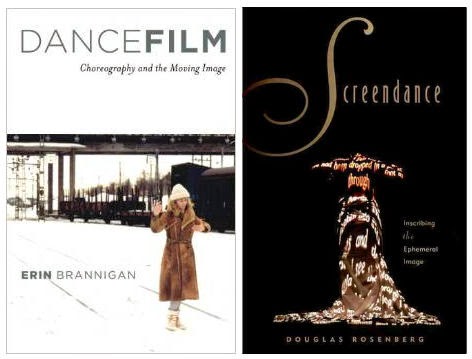

+(36).jpg)


